
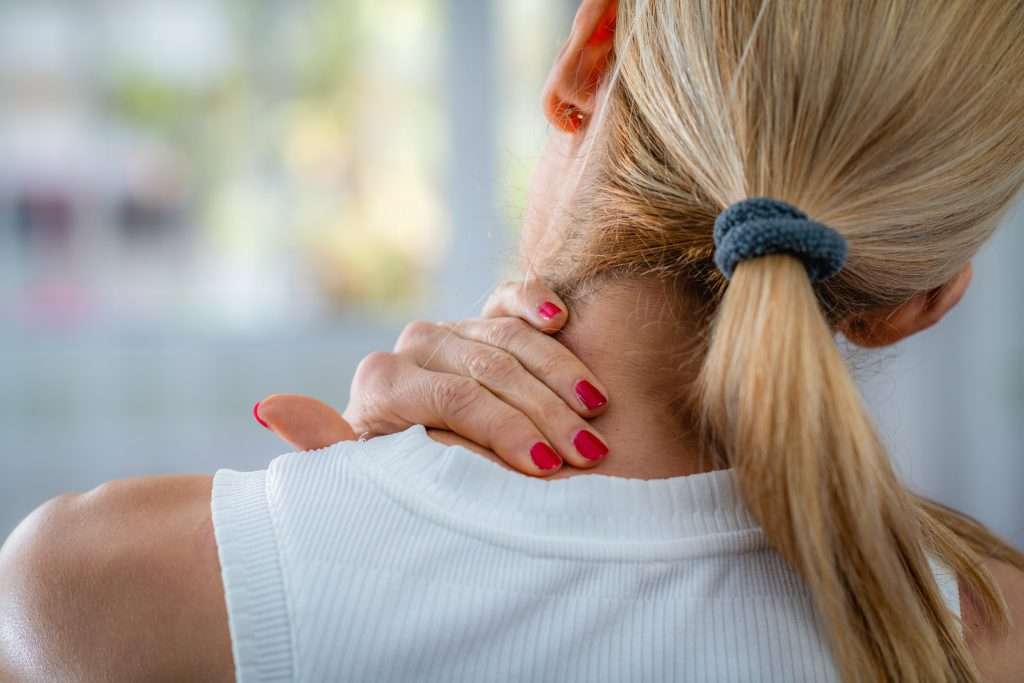
Jaw pain and neck pain may seem like two separate problems, but they can be more closely connected than many people realize. The temporomandibular joint (TMJ) and the cervical spine, or neck, share nerve pathways, muscles, and postural relationships. As a result, dysfunction or tension in one area may contribute to symptoms in the other.
At Tri Rehab, our physical therapists in Dearborn and Canton, Michigan can evaluate factors that may be contributing to TMJ and cervical spine pain and develop an individualized treatment plan designed to improve movement, posture, and function.
What Is the Temporomandibular Joint (TMJ)?
The temporomandibular joint is the hinge joint connecting the jawbone, or mandible, to the temporal bone of the skull. It is located just in front of each ear.
You rely on the TMJ throughout the day whenever you:
- Talk
- Chew
- Yawn
- Open or close your mouth
Because the TMJ is used so frequently, smooth movement depends on the coordinated function of the surrounding muscles, ligaments, bones, and other structures.
Why Are TMJ Pain and Neck Pain Connected?
The relationship between your jaw and neck involves several factors.
Shared Nerve Pathways
Nerves responsible for sensation in the jaw and upper cervical spine share connections within the nervous system. Because of these overlapping pathways, pain originating in the neck may sometimes be perceived around the jaw, while TMJ problems may be associated with neck discomfort or stiffness.
Shared Muscles
The muscles of the jaw, neck, and shoulders don’t work independently.
Muscles such as the trapezius and sternocleidomastoid help support and position the head. Tightness, fatigue, or dysfunction in one part of this interconnected system can affect surrounding structures.
Posture
Posture can also influence both the cervical spine and TMJ. A forward-head position places additional demands on the structures supporting the head, neck, shoulders, and jaw.
Over time, these stresses may contribute to pain, muscle tension, and changes in movement.
Common Signs and Symptoms
TMJ and cervical spine problems can present differently from person to person. Common symptoms may include:
- Jaw clicking or popping
- Jaw locking or aching
- Clenching or grinding the teeth
- Neck stiffness
- Reduced neck range of motion
- Headaches around the temples or base of the skull
- Tight shoulders
- Upper-back fatigue
- Earache or ringing in the ears
- Facial pain
Because these symptoms can have different causes, an appropriate evaluation is important when symptoms persist.
The Connection Between Your Jaw, Neck, Shoulders, and Posture
Poor posture—particularly during prolonged sitting—may contribute to TMJ and cervical spine symptoms.
Common postural patterns can include:
- Forward-head posture
- A chin that protrudes forward
- Rounded shoulders
- Increased tension through the upper trapezius
- Tightness in the muscles at the base of the skull
This type of positioning may place additional load on the neck muscles and TMJ, potentially contributing to discomfort and reduced range of motion.
Everyday Habits That May Contribute to TMJ Pain
Your work environment and everyday habits may also influence your symptoms.
Prolonged Computer and Desk Work
Sitting at a computer for extended periods can encourage forward-head posture and rounded shoulders, particularly when the workstation isn’t positioned appropriately.
Phones, Screens, and Television
Looking down at a mobile device or remaining in a slumped position while watching television may increase stress on the neck and surrounding muscles.
Even holding a phone between your shoulder and ear can contribute to unnecessary muscle tension.
Stress and Jaw Clenching
Stress can affect the body physically. Some people unconsciously clench their jaw or grind their teeth, particularly at night.
When these behaviors occur frequently, they may increase tension around the jaw and surrounding muscles.
Excessive Gum Chewing
Frequent gum chewing places additional demands on the muscles and joints responsible for jaw movement and may aggravate symptoms for some people.
Identifying and modifying contributing habits can therefore be an important part of managing TMJ and neck discomfort.
How Physical Therapy Can Help With TMJ and Neck Pain
Because TMJ dysfunction and cervical spine symptoms can be interconnected, physical therapy may involve evaluating more than just the location where you feel pain.
At Tri Rehab, an assessment may look at:
- Neck and shoulder range of motion
- Tightness or tenderness in cervical muscles
- Shoulder positioning
- Overall posture
- Habits or activities that may be contributing to symptoms
The goal is to identify factors that may be placing unnecessary stress on the neck, shoulders, and jaw.
Physical Therapy Treatment for TMJ and Cervical Spine Pain
Depending on the results of your evaluation, treatment may include:
Postural Correction
Improving sitting and standing posture may reduce unnecessary strain on the cervical spine, shoulders, and jaw.
Manual Therapy
Hands-on physical therapy techniques may be used to address mobility and discomfort involving the cervical spine and shoulders.
Soft Tissue Techniques
Treatment may target tight muscles surrounding the neck and jaw to help improve mobility and reduce muscle tension.
Strengthening Exercises
Specific exercises may be prescribed to strengthen muscles responsible for supporting better posture and movement.
Range-of-Motion Exercises
Exercises targeting the neck and shoulders may help restore mobility when stiffness or limited movement is present.
Pain-Relief Modalities
Your physical therapist may incorporate appropriate modalities as part of an individualized treatment program when needed for pain relief.
Addressing More Than Just the Jaw
TMJ dysfunction isn’t always an isolated jaw problem. The cervical spine, shoulders, posture, daily habits, and muscle function can all play a role in how the jaw moves and feels.
Addressing these areas together may help improve function, posture, mobility, and pain rather than focusing exclusively on the site of discomfort.
If jaw or neck pain is interfering with your daily activities, the team at Tri Rehab can evaluate your symptoms and determine whether physical therapy may be appropriate for you.
Visit www.trirehab.com to learn more or schedule an appointment at our Dearborn or Canton, Michigan locations.
Content provided by Tri Rehab, Inc.
Sources
- Walczyńska-Dragon K, Baron S, Nitecka-Buchta A, Tkacz E. Correlation between TMD and Cervical Spine Pain and Mobility: Is the Whole Body Balance TMJ Related?
- Complete Physio Specialist Physiotherapy Clinics in London. TMJ and the Cervical Spine.
- Armijo-Olivo S, et al. Head and cervical posture in patients with temporomandibular disorders: a systematic review and meta-analysis. Journal of Orofacial Pain. 2011;25(3):199–209.
- Guarda-Nardini L, et al. Interrelationship between temporomandibular joint osteoarthritis and cervical spine pain: Effects of intra-articular injection with hyaluronic acid. CRANIO. 2017;35(5):276–282.
- Sillmann YM, et al. Intra-articular injection of orthobiologics for temporomandibular joint osteoarthritis: a systematic review of randomized controlled trials. International Journal of Oral and Maxillofacial Surgery. 2025;54(7):624–638.


